Electrical systems are designed to provide reliable power throughout a property, but individual components can deteriorate over time. Circuit breakers play an important role by interrupting electrical flow when a circuit becomes overloaded or develops a fault. When a breaker no longer operates correctly, it can affect both electrical safety and everyday convenience.Mutual Electric provides electrical services for properties that need help addressing issues involving electrical panels, circuits, and related equipment. Understanding the condition of your circuit breakers can help you recognize when professional evaluation may be appropriate.A breaker does not necessarily need to be replaced simply because it is old. However, repeated tripping, visible damage, unusual heat, or compatibility problems can indicate that an inspection or replacement is needed. In some situations, the problem may extend beyond one breaker and point toward the need for an electrical panel upgrade.
Understanding the Role of a Circuit Breaker
A circuit breaker is a protective device installed within an electrical panel. Its primary function is to interrupt electricity when it detects conditions such as excessive current. This helps reduce the risk of overheating wires and other electrical hazards.Under normal conditions, electricity passes through the breaker and supplies power to connected outlets, lights, appliances, or equipment. If the circuit draws more current than the breaker is designed to handle, the breaker can trip and stop the flow.A properly functioning breaker should reset when appropriate and remain on when the circuit is operating within its intended capacity. If a breaker behaves differently, it may require professional assessment.7 Signs It’s Time to Replace Your Circuit Breaker
Several warning signs can indicate that a circuit breaker is no longer functioning as intended. Some symptoms may be caused by other electrical problems, so identifying the exact cause requires proper diagnosis.1. The Circuit Breaker Trips Repeatedly
Occasional breaker trips can happen when too many electrical devices are operating on the same circuit. However, repeated trips should not simply be ignored or treated as an inconvenience.A breaker that trips frequently may be responding to an overloaded circuit, a short circuit, a ground fault, or another electrical issue. In some cases, the breaker itself may be worn or defective.Continuously resetting a breaker without investigating why it trips can leave an underlying problem unresolved. An electrician can test the circuit, determine the cause of the tripping, and establish whether the breaker needs replacement.2. The Breaker Feels Hot
Electrical panels and breakers can become warm under certain operating conditions, but noticeable or excessive heat is a reason to seek professional attention.A breaker that feels unusually hot may indicate excessive electrical load, a poor connection, internal damage, or another problem within the panel. Heat can also affect surrounding components if the underlying issue continues.Homeowners should avoid removing panel covers or attempting to tighten internal electrical connections themselves. Electrical panels contain energized components that can present serious hazards even when individual breakers are switched off.3. You Notice a Burning Smell
A burning or unusual electrical odor near an electrical panel should be treated seriously. It can potentially indicate overheating insulation, damaged wiring, loose connections, or a failing electrical component.If the smell appears to come from the panel, avoid repeatedly resetting breakers to see whether the odor disappears. A qualified electrician should inspect the system and determine the source.The appropriate solution may involve replacing a breaker, repairing wiring, correcting a connection, or addressing a larger panel issue. The breaker should not be considered the problem automatically without an inspection.4. There Is Visible Damage or Discoloration
Physical damage is another sign that an electrical component should be professionally evaluated. Cracks, melted plastic, scorching, discoloration, corrosion, or other unusual changes around a breaker may indicate excessive heat or an electrical fault.A breaker that has sustained physical damage may no longer provide reliable protection. Continuing to use visibly damaged electrical equipment can create additional risks.If you notice anything unusual around the breaker or electrical panel, do not attempt to remove the damaged component yourself. An electrician can determine whether the breaker can be safely replaced or whether additional panel repairs are necessary.5. The Breaker Does Not Reset Properly
A breaker that trips and will not stay in the ON position can indicate an active electrical problem. However, it can also be a symptom of a defective or worn breaker.For example, if a circuit has no obvious overload but the breaker immediately trips after being reset, there may be a short circuit, ground fault, or another issue that needs to be investigated.Repeatedly forcing a breaker into the ON position is not a safe solution. The circuit should be assessed so the actual cause can be identified before the breaker is returned to service.6. Your Electrical Needs Have Increased
Changes in how a property uses electricity can sometimes reveal limitations in an existing electrical system. Adding major appliances, electric vehicle charging equipment, heating and cooling equipment, workshop tools, or other high-demand devices can increase the electrical load.An older panel may not have sufficient capacity for these changes. In this situation, replacing one breaker may not solve the underlying issue.A home electrical panel upgrade may be more appropriate when the existing panel does not provide enough capacity or when its configuration is no longer suitable for the property’s electrical requirements.7. The Electrical Panel Is Outdated
Age alone does not automatically mean that a circuit breaker or panel must be replaced. However, older electrical equipment may have limitations related to capacity, condition, compatibility, or available replacement components.If a property still has an outdated panel, an electrician can evaluate its condition and determine whether repairs are reasonable or whether a broader upgrade should be considered.An electrical panel upgrade service can involve more than replacing individual breakers. Depending on the property’s requirements, the work may address panel capacity, breaker compatibility, wiring connections, grounding, and other components.Circuit Breaker Replacement vs. an Electrical Panel Upgrade
One of the most important considerations is determining whether the problem involves one breaker or the entire electrical panel.A circuit breaker replacement may be appropriate when a specific breaker has failed or has become damaged while the rest of the panel remains suitable for the property’s electrical requirements.An electrical panel upgrade may be considered when the panel has insufficient capacity, has significant deterioration, cannot accommodate necessary circuits, or is otherwise unsuitable for current electrical demands.These two services should not be treated as interchangeable. Replacing a breaker does not automatically increase the overall capacity of an electrical panel.When a Home Electrical Panel Upgrade May Be Necessary
A home electrical panel upgrade may become relevant when a property has undergone significant changes since its electrical system was installed.For example, older homes may have been designed around electrical demands that are much lower than those of modern households. Multiple heating and cooling systems, kitchen appliances, home offices, entertainment equipment, electric vehicles, and other devices can increase demand.An electrician can evaluate the existing service and panel before recommending an upgrade. The evaluation can help determine whether the current equipment can safely support the property’s needs.It is also important to distinguish between an electrical panel upgrade and simply adding more breakers. The panel and electrical service have specific capacity limitations, so additional circuits should only be added when the system can safely support them.What Happens During a Circuit Breaker Inspection
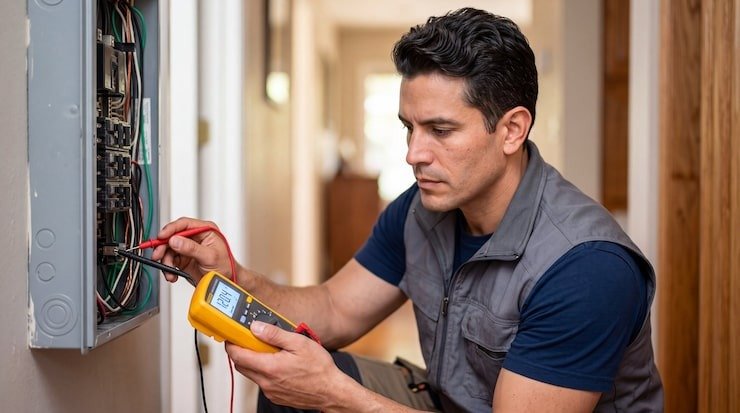
A professional inspection generally starts with an assessment of the reported symptoms. The electrician may determine which breaker is involved, what equipment is connected to the circuit, and whether the breaker is repeatedly tripping under specific conditions.The panel can then be evaluated for signs of overheating, physical damage, loose connections, corrosion, incompatible components, or other concerns. Depending on the situation, electrical testing may also be performed.The goal is to identify the actual source of the problem rather than replacing a component without understanding why it failed.Why Replacing a Breaker Is Not Always the Complete Solution
A defective breaker can certainly cause electrical problems, but breakers can also trip because of conditions elsewhere in the electrical system.An overloaded circuit, damaged wiring, faulty appliance, short circuit, or ground fault can all contribute to breaker trips. Replacing the breaker without addressing the underlying cause may not resolve the problem.For this reason, homeowners should avoid purchasing a replacement breaker and installing it without professional guidance. Breakers must be compatible with the electrical panel and installed according to applicable electrical requirements.How to Reduce Stress on Your Electrical System
Although circuit breakers are designed to protect electrical circuits, sensible electrical use can help reduce unnecessary strain on the system.Avoid relying heavily on extension cords or power strips for equipment that requires substantial electrical power. Major appliances should generally be connected to appropriate circuits designed for their electrical requirements.Pay attention to repeated breaker trips, flickering lights, unusual odors, warm outlets, or other changes in electrical performance. These symptoms do not necessarily mean that a breaker needs replacement, but they are worth investigating.Regular attention to electrical issues can also help prevent small problems from becoming more complicated repairs.When to Contact an Electrician
Some electrical issues can be observed by homeowners, but diagnosis and repair inside an electrical panel should be handled by a qualified professional.You should consider arranging an electrical inspection if a breaker repeatedly trips, feels unusually hot, shows physical damage, produces unusual odors, or fails to reset normally.If the property has increasing electrical demands, an electrician can also determine whether an electrical panel upgrade is appropriate. This approach can help ensure that the proposed work addresses the actual requirements of the property rather than focusing only on one faulty component.Recognizing warning signs early can help you determine when an electrical issue needs professional attention. Repeated breaker trips, excessive heat, burning odors, visible damage, resetting problems, increased electrical demand, and outdated equipment can all justify an electrical evaluation.Contact us to discuss your electrical panel concerns and arrange an appropriate professional assessment.Frequently Asked Questions
How often should circuit breakers be replaced?
There is no universal replacement schedule for every circuit breaker. A breaker may require replacement when it becomes damaged, fails to operate correctly, or is no longer suitable for the electrical system.
Does a frequently tripping breaker always need replacement?
No. Frequent tripping can result from an overloaded circuit, short circuit, ground fault, faulty appliance, or defective breaker. Professional diagnosis is needed to identify the cause.
Can I replace a circuit breaker myself?
Working inside an electrical panel can expose you to dangerous electrical components. Breaker replacement should be performed by a qualified electrician who can verify compatibility and safe installation.
What is an electrical panel upgrade?
An electrical panel upgrade involves improving or replacing the existing panel to meet the property’s electrical requirements. Depending on the situation, the work may address capacity, circuits, breakers, and other electrical components.
When does a home need an electrical panel upgrade?
An upgrade may be appropriate when the existing panel lacks sufficient capacity, cannot accommodate new electrical loads, has significant deterioration, or is not suitable for the property’s current requirements.
What should I do if my breaker smells like it is burning?
A burning smell near an electrical panel should not be ignored. Avoid repeatedly resetting the breaker and arrange for a qualified electrician to inspect the system and identify the source.